

Fundamentals of Dynamic Weighing: Defining Parameters for Residence Time and Throughput
Introduction: The Challenge of High-Speed Measurement
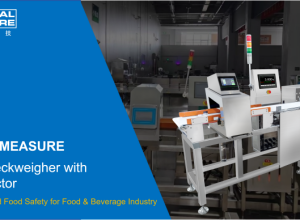
Static weighing requires the load to be completely at rest for a stable measurement. In contrast, dynamic weighing systems—found in checkweighers, filling machines, and conveyor scales—must capture an accurate weight reading while the material or product is continuously in motion. This transition introduces complex engineering challenges, primarily centered around balancing measurement accuracy against operational speed. The two most critical parameters governing this balance are Residence Time and Throughput.
1. Residence Time: The Window for Stability
Residence Time (sometimes called Dwell Time) is the precise period, measured in milliseconds, during which the product or material is fully supported by the load receptor (the load cell or platform). It is the maximum allowable window the weighing terminal has to capture the signal, stabilize it, and output the final weight value.
Factors Dictating Residence Time
- Conveyor Speed: Higher conveyor speeds drastically reduce the time the product spends on the scale.
- Platform Length: A longer weighing platform increases the available time. For a product of length $L_p$ traveling at speed $V$: The Residence Time is proportional to $L_p / V$.
- Filter Strength: The signal processing required to stabilize the noisy dynamic signal is the single largest consumer of the Residence Time. A stronger digital filter (to eliminate vibration) requires more time to process samples, directly increasing the required Residence Time.
The fundamental optimization problem in dynamic weighing is to select the weakest digital filter that still achieves the required accuracy, thereby minimizing the Residence Time and maximizing the speed.
2. Throughput: The Speed of Operation
Throughput is the core metric of a dynamic weighing system's efficiency, defined as the number of stable weighments completed per unit of time (typically items per minute or kilograms per hour). Maximizing throughput is the primary goal of any automated weighing line.
Relationship to Residence Time
Throughput is the inverse function of the total time required per product, which includes the Residence Time plus the Product Separation Time (the time needed to clear the load receptor and prepare for the next product). Optimizing throughput requires minimizing both components.
The Role of Sampling Rate (ADC Speed)
Advanced weighing indicators use extremely fast Analog-to-Digital Converters (ADCs), often sampling at 500 Hz to 1000 Hz or more. A high sampling rate is critical in dynamic weighing because it provides the digital filter with more data points within the brief Residence Time window, allowing it to work faster and more effectively to achieve stability.
Critical Dynamic Parameters
To design a successful dynamic weighing system, an engineer must accurately define three key technical parameters:
| Parameter | Definition | Impact |
|---|---|---|
| Minimum Acceptable Accuracy ($\sigma$) | The maximum standard deviation (Sigma) allowed for the measured weight distribution. This is often dictated by legal standards (e.g., Average Weight Legislation). | The higher the required accuracy (lower Sigma), the stronger the filter needed, increasing Residence Time. |
| Load Acquisition Time | The time required for the scale's output signal to rise from zero to a point where processing can begin, often corresponding to the initial weight reading. | Determined by the mechanical frequency of the scale and the velocity of the object. |
| Settling Criteria | The digital logic used by the terminal to determine when the signal has achieved sufficient stability (e.g., 99% of samples within X divisions). | A strict criterion reduces speed but guarantees data integrity. |
The Solution: The Dynamic Filter
Traditional static filters are too slow for dynamic applications. Dynamic weighing indicators employ specialized algorithms that can process signals extremely rapidly:
- Bandpass Filtering: Used to specifically exclude low-frequency mechanical noise (like structural resonances) and very high-frequency electrical noise, focusing only on the useful signal range.
- Predictive Algorithms: Some advanced terminals use algorithms that calculate the final weight based on the slope and trajectory of the rising weight signal, predicting the final stable value before the full Residence Time has elapsed. This significantly boosts throughput without sacrificing accuracy.
Mastering dynamic weighing is about precisely defining the relationship between the required Accuracy (Sigma) and the achievable Throughput. It is an engineering task that requires iterative testing and optimization of filter strength against conveyor speed.